Transforming Humanitarian Energy Access
Powering inclusive solutions to refugee energy poverty

Worldwide, 120 million people have been forcibly displaced from their homes. 94% of those living in refugee camps and settlements have no meaningful access to electricity, and 81% rely on firewood or charcoal for cooking – which puts their health at risk.
Our reports and insights
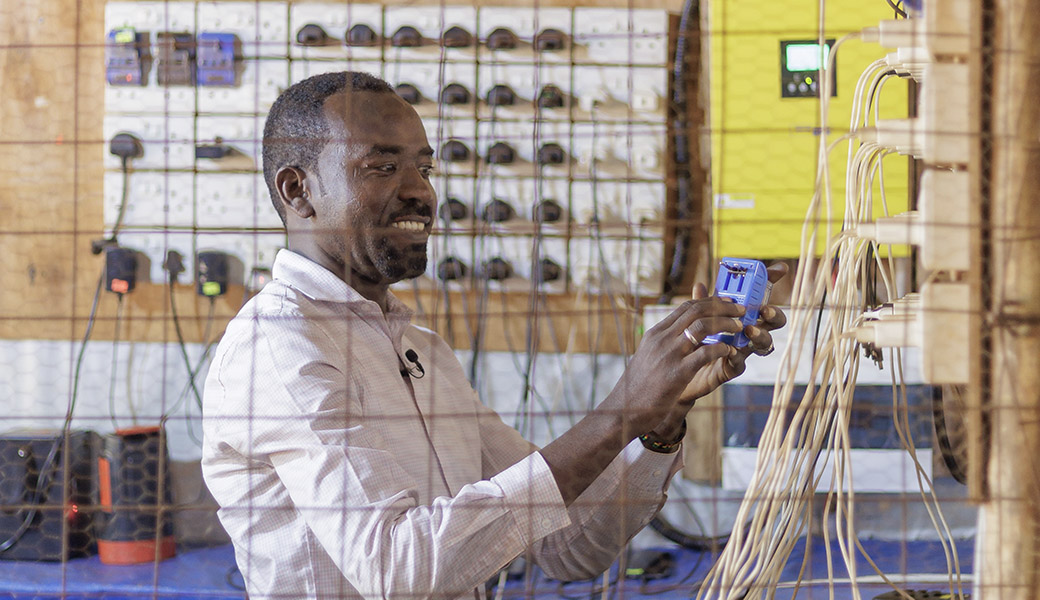
Landscape study on refugee-led energy delivery
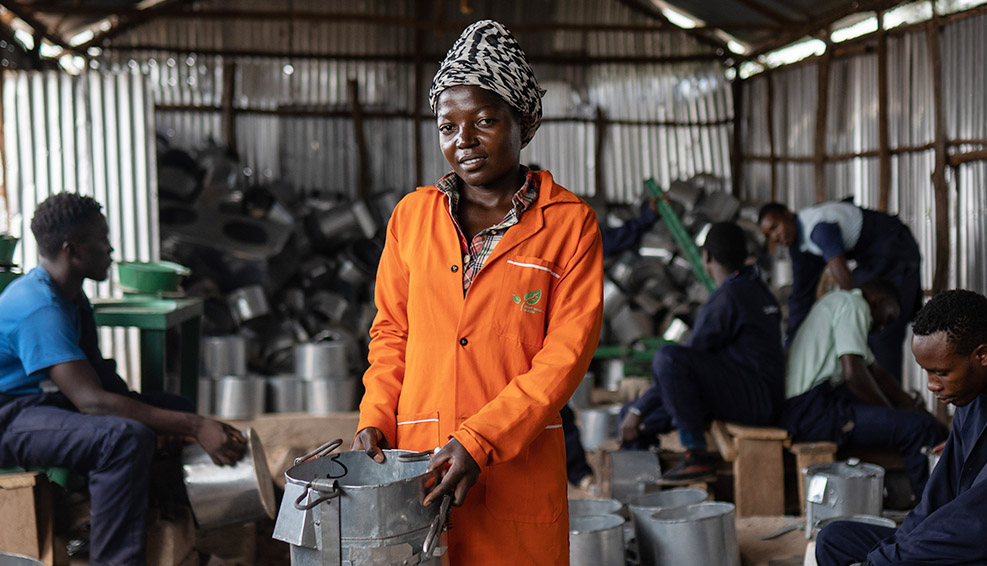
A guide to scaling refugee-led energy access solutions
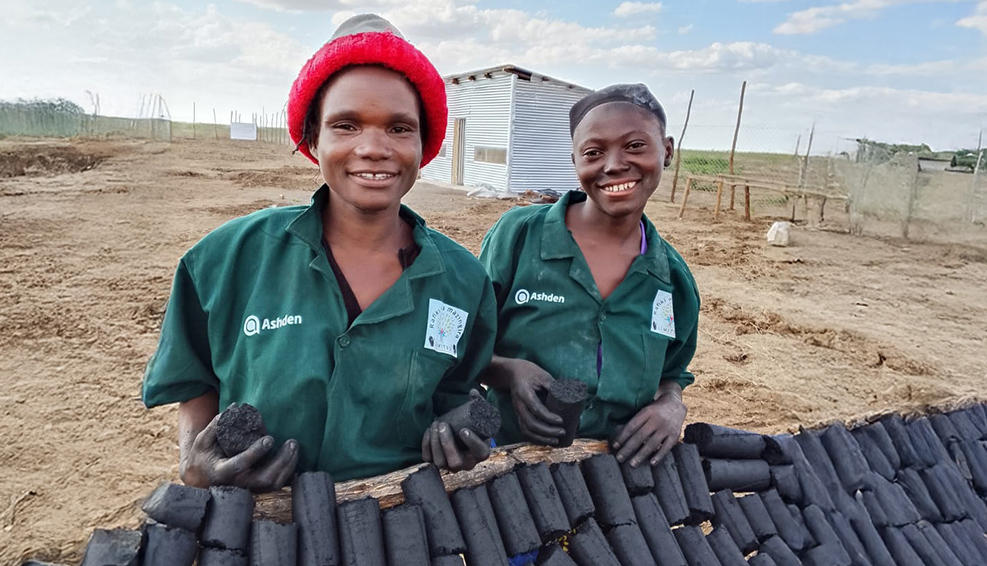
Kenyan innovator shows power of homegrown solutions
In Kenya’s Kakuma Kalobeyei Integrated Settlement, a refugee-led business turns household and agricultural waste into an affordable, sustainable cooking fuel.
The success and growth of Rafiki Wa Mazingira has been accelerated by Ashden, as part of the Transforming Humanitarian Energy Access programme. Our partnership with Rafiki wa Mazingira has important lessons for funders and the humanitarian sector. It shows the impact of empowering refugee-led organisations, and the need to devolve decision-making to those with local expertise.
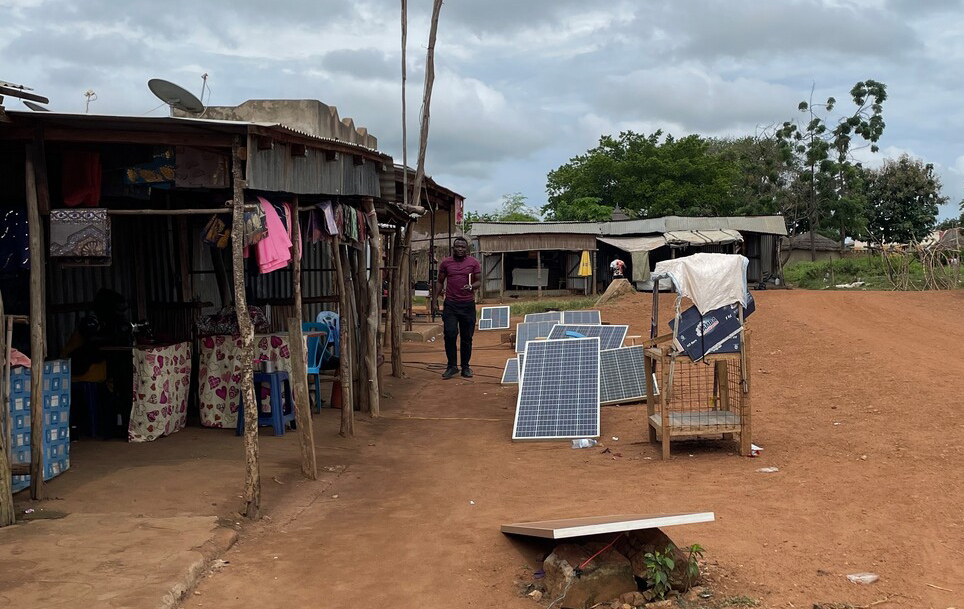
Uganda Landscape Study: A growing clean energy market – with refugee entrepreneurs at its centre.
Across Nakivale, Kyangwali, Palorinya and Adjumani, the study finds strong demand for cleaner energy and refugee-led solutions with potential to grow – from biogas and briquettes to solar and clean cooking. But finance and wider business support are not keeping pace with that potential.
Explore the landscape study to understand the market, barriers and opportunities for investment, with recommendations for funders and partners.
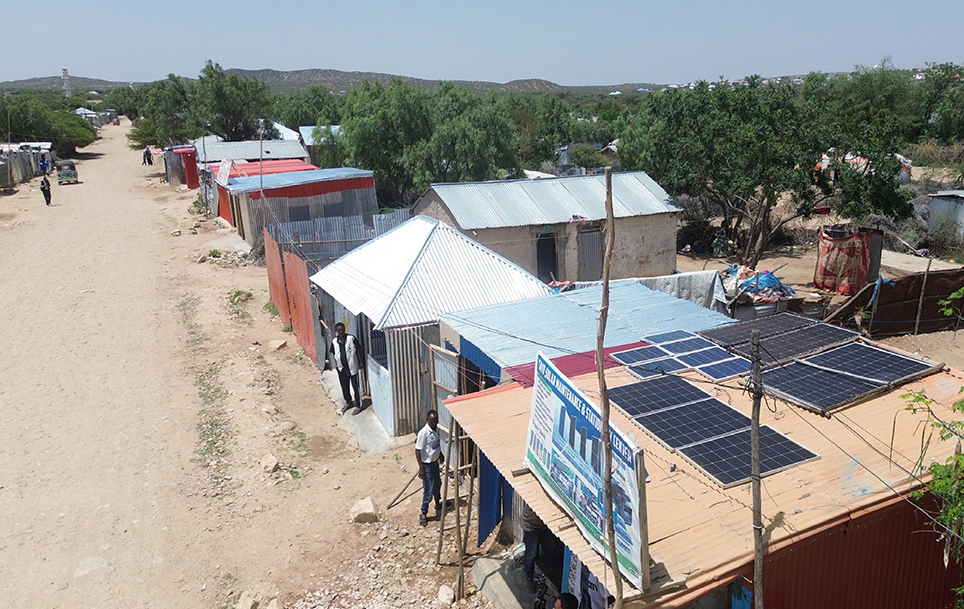
Ethiopia Landscape Study: An active refugee-led energy economy, with significant potential to grow.
Ashden supports refugee-led solutions
Ashden is giving direct funding and support to refugee-led organisations and entrepreneurs in Uganda, Kenya and Ethiopia, nurturing access to renewable energy for refugees and displaced people. We are doing this as a partner in the Transforming Humanitarian Energy Access programme, funded with UK aid from the UK government via the Transforming Energy Access platform.
Our funding and support helps refugee-led businesses and not-for-profits strengthen and scale their work in delivering clean energy products and services to households and entrepreneurs in refugee camps and settlements. We are also gathering and sharing insights on this issue, to create wider change across the humanitarian system.
The Refugee-led Energy Enterprise Accelerator
Our Refugee-led Energy Enterprise Accelerator provides grants of £25,000 to social enterprises and co-operatives led by refugees and forcibly displaced people.
The organisations, which are based in Uganda, Kenya and Ethiopia, also receive technical assistance and communications support.
The accelerator shows how, with the right support in place, refugee-led clean energy initiatives can achieve impact and scale.
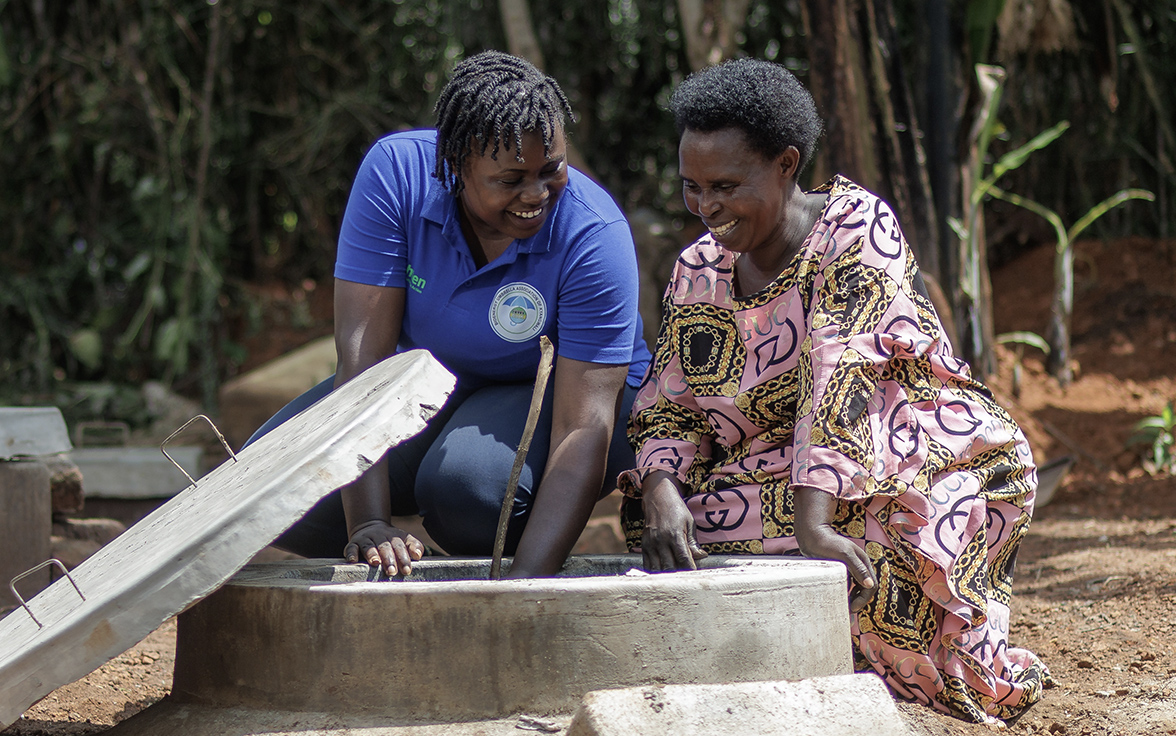
Bio-energy Umbrella Association of Kyangwali
Add card content. You can use basic formatting here, but please do NOT use alignment syling – it might break the card.
Live in Green
Kyaka II Refugee Settlement, Uganda
Live in Green empowers refugees and host communities with solutions that spark access to clean energy, reduce waste and promote climate-smart agriculture. Support from Ashden is scaling up Live in Green’s work on clean cooking. In a place where most households rely on firewood and charcoal, the organisation makes and distributes affordable, efficient eco-stoves and environmentally-friendly compressed briquettes. These protect families from deadly air pollution – while lowering fuel bills and reducing deforestation.
Live in Green will use its grant to upgrade its briquette-making infrastructure, boosting efficiency and output, and to improve its eco-stove technology, with enhanced aeration for safer and more efficient cooking. The organisation will also recruit and train four new team members to support expanded operations, and develop improved packaging and visibility campaigns to increase brand recognition. And it will distribute its products more widely, and deliver targeted community engagement campaigns.
Okapi Green Energy Limited
Kakuma, Kenya
Okapi Green Energy Limited delivers affordable clean energy solutions through a 20kW solar mini-grid, serving 200 homes and businesses, and individual solar home systems powering lights and appliances. This reduces reliance on kerosene and diesel, improving the health of people in one of the world’s largest refugee settlements.
The organisation’s business model blends direct sales with longer-term payment plans to enhance affordability. It also trains young people and women in solar installation and maintenance, strengthening local skills and creating jobs. Okapi Green Energy Limited will use its grant to expand its inventory of solar home systems, and strengthen its community sales and technician networks, as well as its distribution channels. And it will develop flexible payment plans for low-income households.
Rafiki Wa Mazingira
Kakuma, Kenya
Rafiki Wa Mazingira focuses on clean energy and waste-to-energy innovation. The organisation produces biochar briquettes – an efficient cooking fuel – from agricultural waste and invasive species like prosopis, addressing both energy poverty and environmental degradation. Their solution tackles local waste problems while providing a healthier, more affordable alternative to wood-based charcoal, combating deforestation and reducing greenhouse gas emissions.
Rafiki Wa Mazingira will use its grant to buy advanced briquette-making machinery, enhancing production capacity and efficiency. Funding will also upgrade the organisation’s facilities, and support provide comprehensive training programs. The organisation’s growth will create employment opportunities within the refugee community, particularly for women, and allow more people to benefit from an effective, affordable and sustainable clean energy solution.
Muruqmaal Energy and Electric Cooperative
Helaweyn, Ethiopia
Muruqmaal is a cooperative improving energy access for refugee and host communities, through sales and servicing of small-scale solar technologies. These include solar home systems, individual appliances and devices, and battery-charging solar kiosks. The organisation’s pay-as-you-go model offers affordable monthly fees tailored to user groups, which include vulnerable households and entrepreneurs within the refugee settlement.
Revenues support a revolving maintenance fund, and Muruqmaal engages the communities through Photovoltaic Electrification Committees. The organisation will use its grant to expand upgrade their own power supply from diesel to solar; boost their sales capacity, and offer better after-sales services. Ashden is also providing tailored business support, including help to develop a sustainable pricing model and financial management systems.
South Sudanese Women Building Association
Kiryandongo Refugee Settlement, Uganda
The South Sudanese Women Building Association (SSWBA) is dedicated to empowering women and young people, from refugee and host communities, through integrated development programmes. Its work includes tree planting and training communities to produce energy-saving stoves and efficient briquettes. SSWBA’s business model brings access to clean energy, as well as new or raised incomes.
SSWBA will use its grant to establish a solar-powered maize mill, launch a briquette production plant, and roll out community awareness campaigns on clean energy use. This will reduce reliance on firewood, promote conservation, improve food security, and create income-generating opportunities, especially for women and girls. Community groups will manage operations, with revenues shared and reinvested in clean energy projects.
Inclusive Investment Pilots: Accessible funding for refugee innovators
In early 2025 we opened up applications for THEA Inclusive Investment Pilots to support the development of clean, affordable and sustainable energy delivery models in displacement settings in Uganda, Kenya and Ethiopia.
Deeper insights on refugee-led energy access
Refugee-led initiatives have shown how clean, affordable energy can be delivered where it’s needed most. Importantly, they can do so while supporting local economic growth and social development, in ways not possible through the top-down approaches that have traditionally dominated the humanitarian system.
See how support for refugee-led organisations can drive inclusive, sustainable economic development.
Find out more
To find out more about the programme and our portfolio of innovators, contact Isona Shibata, Head of International
The programme is supported by
The THEA programme is funded by UK aid from the UK government via the Transforming Energy Access platform; however, the views expressed do not necessarily reflect the UK government’s official policies.